
Vinyasa & the Gunas: Energizing Your PCOS Self
Many people with PCOS describe their energy as unpredictable. Some days bring brain fog, heaviness, or exhaustion that feels disproportionate to what they did. Other days bring restlessness, anxiety, or a wired but tired feeling that makes slowing down uncomfortable. This fluctuation is not a personal failure. It is a nervous system and hormonal experience.
Yoga philosophy offers a framework that can help make sense of these shifts without pathologizing them. The concept of the gunas comes from the Yoga Sutras and Ayurveda and describes three qualities of nature that influence both mind and body. When applied thoughtfully, the gunas can help people with PCOS understand when to move, when to rest, and how to relate to their energy with more compassion.
Vinyasa yoga, when practiced intentionally, can become a tool for working with the gunas rather than overriding them. This blog explores how understanding sattva, rajas, and tamas can support energy regulation, mental health, and body trust for those living with PCOS.
Understanding PCOS, Energy, and the Nervous System
PCOS is not just a reproductive or metabolic condition. It impacts the nervous system, stress response, sleep, mood, and sense of embodiment. Chronic inflammation, insulin resistance, cortisol dysregulation, and experiences of medical invalidation all shape how energy is experienced.
Many clients internalize the belief that they should push through fatigue or calm themselves out of anxiety. Over time, this creates a disconnect from the body’s cues. Yoga philosophy invites a different approach. Instead of asking how to force energy to behave, it asks how to listen to what is already present.
This is where the gunas become especially useful.
The Gunas Explained
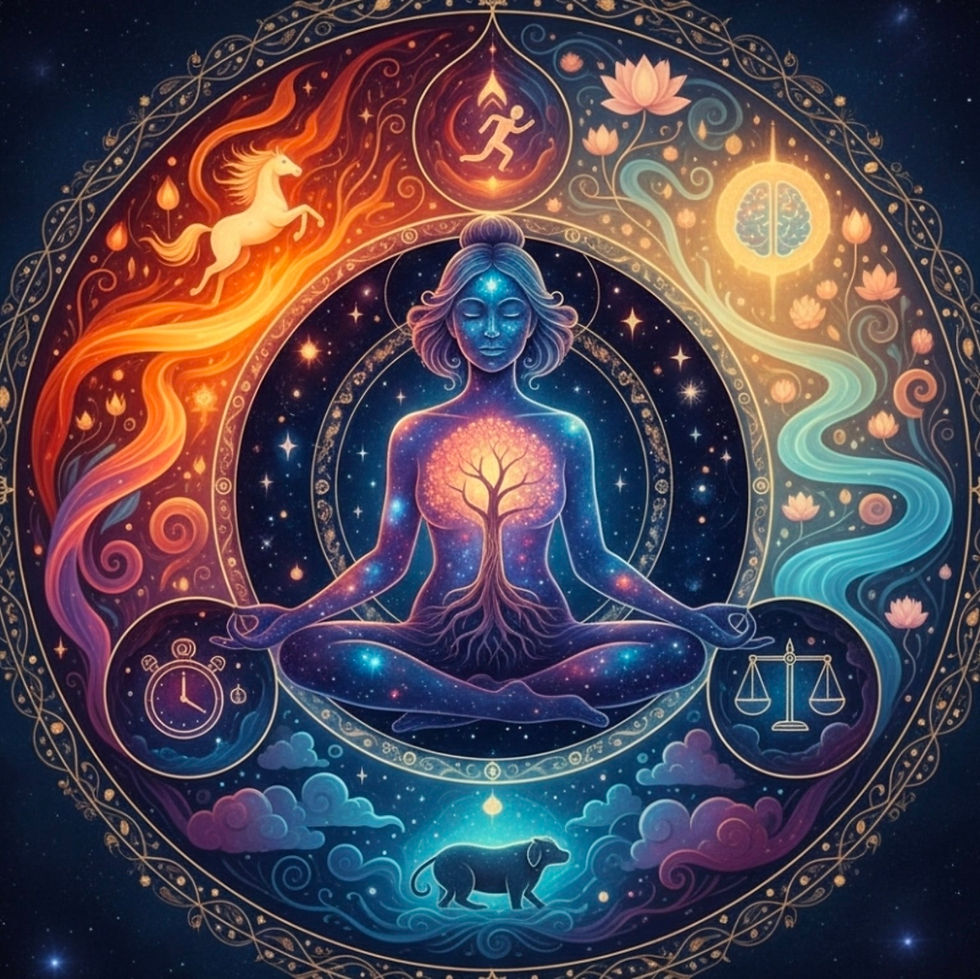
The gunas describe three fundamental qualities that exist in all aspects of nature, including the mind and body. No guna is good or bad. Balance and flexibility are the goal.
Tamas represents heaviness, inertia, rest, and stillness. In the body, tamas can feel like fatigue, low motivation, depression, or brain fog. In PCOS, tamas often shows up during flare ups, hormonal crashes, or periods of burnout.
Rajas represents movement, activation, intensity, and change. In the body, rajas can feel like anxiety, restlessness, irritability, or the urge to constantly do more. For people with PCOS, rajas often appear as pushing through symptoms, over exercising, or feeling unable to slow down.
Sattva represents balance, clarity, steadiness, and ease. It is not constant happiness or high energy. Sattva feels grounded, present, and regulated. In PCOS, cultivating sattva can support hormonal balance, emotional regulation, and body trust.
Most people move between all three gunas throughout the day. Problems arise when one becomes dominant for long periods without support.
Why Vinyasa Can Support PCOS When Practiced Intentionally
Vinyasa yoga is often misunderstood as always being fast, sweaty, or intense. At its core, vinyasa simply means linking breath with movement. That link creates an opportunity to work directly with the nervous system.
For people with PCOS, vinyasa can be adapted to meet the body where it is rather than forcing it into a specific pace or shape. The goal is not calorie burn or achievement. The goal is regulation.
By understanding the gunas, practitioners can choose how they move rather than defaulting to what they think they should do.
Practicing With Tamas: When Energy Is Low
When tamas is present, the body may feel heavy, foggy, or resistant to movement. Many people respond by shaming themselves or avoiding movement altogether.
A supportive vinyasa practice during tamasic states focuses on gentle stimulation rather than intensity.
Helpful approaches include:
Slow, steady transitions between poses
Standing sequences with longer holds
Grounded movements like lunges, squats, and supported backbends
Breath cues that emphasize expansion without force
Emotionally, tamas often carries self-criticism. A mental health informed practice acknowledges that rest and gentle movement are not failures. They are forms of care.
Practicing With Rajas: When the System Is Over Activated
Rajas often feels productive, but it can easily tip into anxiety or burnout. Many people with PCOS live in a state of chronic rajas due to stress, medical pressure, or internalized urgency around healing.
Vinyasa during rajasic states should focus on containment and pacing rather than adding more stimulation.
Helpful approaches include:
Slower flows with intentional pauses
Repetitive sequences that create predictability
Longer exhales to support nervous system settling
Emphasis on sensation rather than achievement
From a mental health lens, rajasic practices support boundary setting and challenge the belief that worth is tied to productivity.
Cultivating Sattva Through Vinyasa
Sattva is not something to force. It emerges when the body feels safe, supported, and listened to.
In vinyasa, sattva may feel like:
Smooth transitions that match the breath
A sense of effort balanced with ease
Emotional steadiness during and after practice
Increased interoception and body awareness
For people with PCOS, sattva supports hormonal communication and emotional resilience. It allows movement to become a conversation with the body rather than a command.
Mental Health Integration: Using the Gunas as Emotional Language
One of the most powerful aspects of the gunas is that they offer non-judgmental language for internal states. Instead of saying “I am lazy” or “I am too much,” clients can say “tamas is present” or “rajas is high today.”
This shift reduces shame and increases curiosity.
In therapy, the gunas can support:
Emotional literacy
Nervous system awareness
Self-compassion
Improved communication with partners or providers
For individuals with PCOS who have experienced gaslighting or dismissal, this framework validates lived experience without requiring proof.
Listening Over Forcing
The culture around both fitness and PCOS often promotes control. Control food. Control symptoms. Control the body.
Yoga philosophy offers a different path. Balance does not come from domination. It comes from relationship.
Vinyasa practiced through the lens of the gunas encourages adaptability. Some days call for activation. Some days call for rest. Neither is a failure.
Closing Reflection
Your body is not broken. It is responsive. PCOS simply means that the signals may be louder, more complex, or shaped by layers of stress and history.
Vinyasa and the gunas offer a way to meet those signals with curiosity instead of criticism. Over time, this builds trust. Trust supports regulation. Regulation supports healing.
Not by force. By listening.
Disclaimer
This blog is for educational and informational purposes only and is not a substitute for medical advice, diagnosis, or treatment. Yoga and mind body practices should be adapted to your individual needs and medical history. Always consult with a qualified healthcare provider before beginning or modifying any movement, wellness, or mental health practice, especially if you have PCOS or other health conditions.


Comments